
Why I decided to write my own debut novel set in Portobello - I made a schoolboy error

Updated: Jan 20
Former Scotsman journalist Kevan Christie opens up on penning his debut novel
Everybody does have a book in them, but in most cases that's where it should stay” is a line attributed to the late, great Christopher Hitchens.
I am reminded of this, dear readers, in a fleeting moment of joy as I make a triumphant return to column writing to punt my recently published opus, the crime comedy To Be Frank.

The variation of this quote I encountered on the two-year journey from computer screen to page can best be described as ‘everybody has an IDEA for a book in them, but in most cases, they won’t write it’. A particular type of stubborn resistance to hard fact is required and I having nothing, but admiration for anyone who finishes the job.
I found completing the first draft, which took exactly a year, a torturous process, screaming for my mother and begging for the misery to end. The five drafts that followed were just as bad.
Writing in no more than 30-minute bursts, early in the morning before an early afternoon nap, I found no shortage of things to distract me from the ‘writing process’.
Suddenly, paint and wallpaper samples from the missus took on the significance of a Michelangelo fresco ceiling. I would develop an urgent need to empty bins, weed, turn the dishwasher on for cutlery only and sit enraptured watching Dion Dublin present Homes Under the Hammer reruns from 2016. ‘Get it in the mixer.’
I would open the door to the postman as he made his way up the drive running to give him a hug and grabbing his ankles begging him not to leave me alone with Frank Savage, the protagonist of my book, set in the seaside town of Portobello.
All of this before constantly walking round the picturesque mining village of Crossgates and surrounding area where I live, to the point where the locals would ring the police to report a suspicious wannabe writer staring at his gouty toes. I hung around Costcutter like Alan Partridge in the garage, talking to the staff, Ali and Tracy, about the lateness of milk deliveries and who does the best Macaroni pies in Fife. Ten thousand steps a day I hear you say - double it and pass me a blister plaster while you’re at it.

I had also made the schoolboy error of boastfully telling every woman and her dug that I was writing a book. Distant family members would phone me after the 9pm watershed to ask “how’s the book coming along?” - a phrase that played on a loop in my personal limbo.
“Eh?...thanks for asking, it’s err…coming along and that,” I lied. By this point my daily word count had plateaued at 15. Friends who asked me what the book was about were met with blank stares and threats of decapitation. But I was the only one losing his head.
Euphoric at finally completing the first draft, I quickly pinged the first three chapters off to the seven or so people I know who can definitely read. Big mistake, for there is no longer wait in life than the wait a novice writer experiences waiting on feedback, in this case another word for praise.
In the words of renowned songstress and penalty kick taking expert Diana Ross – I’m Still Waiting.
I don’t have any real advice for would-be writers, but I would urge caution in sending samples of your work out to people you know. For some there is great joy to be had in dissecting your efforts, a veritable legion of Devil’s Advocates waiting to serve you a number two sandwich. Instead pick a stranger, a professional editor who knows their stuff and pay them if you must, for in my opinion this is money well spent.
This and the absolute golden rule of don’t tell anyone you’re writing a book should see you in good stead.
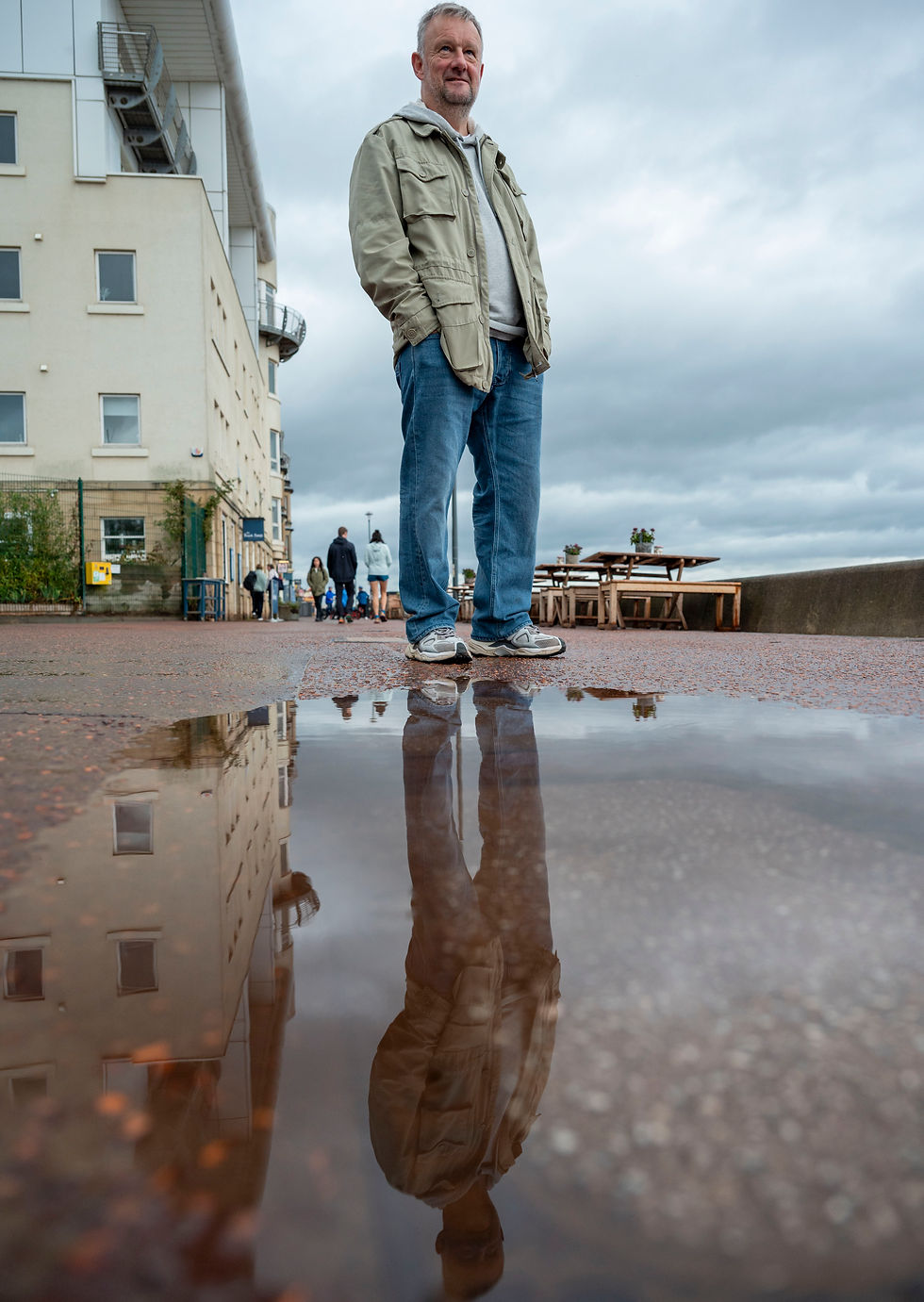
Eventually I started to enjoy the rewriting process, akin to finally completing a giant jigsaw puzzle that gathers dust in the garage.
I allowed myself to step back in time and revisit the 1980s of my youth during the writing of To Be Frank, returning to the seaside town of Portobello in my dreams. I found this a cathartic experience, but became aware that my memories were skewed by nostalgia.
I’ve heard writing described as a vanity project, but this was an exercise in self-loathing.
The book tells the story of fifty-something newspaper columnist Frank Savage, who under threat of the sack pens a rant against dogs and babies in cafes only to become a media sensation. On a night out, he crosses paths with Brewster, a former football hooligan linked to Frank’s tragic past.
Meanwhile, his estranged daughter Naomi, a brilliant accountant for a London crime syndicate, pitches up in Portobello to work with Brewster overseeing a money laundering scam concerning the redevelopment of an old art deco cinema.
As Naomi and Frank grow closer and begin to heal old wounds, neither realises they are hiding secrets that would devastate the other.
So, what have I learned from having my debut novel published? Firstly, I know my strengths as a writer and the areas where I must improve.
I am comfortable with dialogue and shaping characters. Plotting, on the other hand, takes me out of my comfort zone.
I have always observed how people talk, particularly in Edinburgh. The folk I grew up around tend to pepper their speech with what I would call ‘ironic slang’ regardless of their social status, although it tends to be the preserve of the upper working class. By this I mean they’ll throw in the odd ‘radge’ here, a ‘barrie’ there and describe something be it a cup of coffee or a personal insult as ‘shan’.
I notice how men of a certain vintage like to bark ‘CORRECT’ in conversation like they’re marking your speech and often use the word ‘GUARANTEED’ for emphasis.
I’m now making a start on my second book, a sequel, prequel, sequel to the first in the style of The Godfather 2 and have gotten as far as page one. There, I’ve just broken my own golden rule. Please don’t ask me how it’s going.


Comments